After a decade of surveys across the Peak District, Dr Carlos Bedson reflects on the people, places and moments behind long-term mountain hare research, how early support from PTES helped make the work possible, and why this rare English population urgently needs protection.
In winter 2003, I was walking the Pennine Way over Bleaklow, through patches of snow scattered across the dark peat. From the corner of my eye came a flash of white, then another.
Looking around, I saw five white-coated animals scattered across the moor, quietly foraging and staring back at me. These were my first mountain hares.
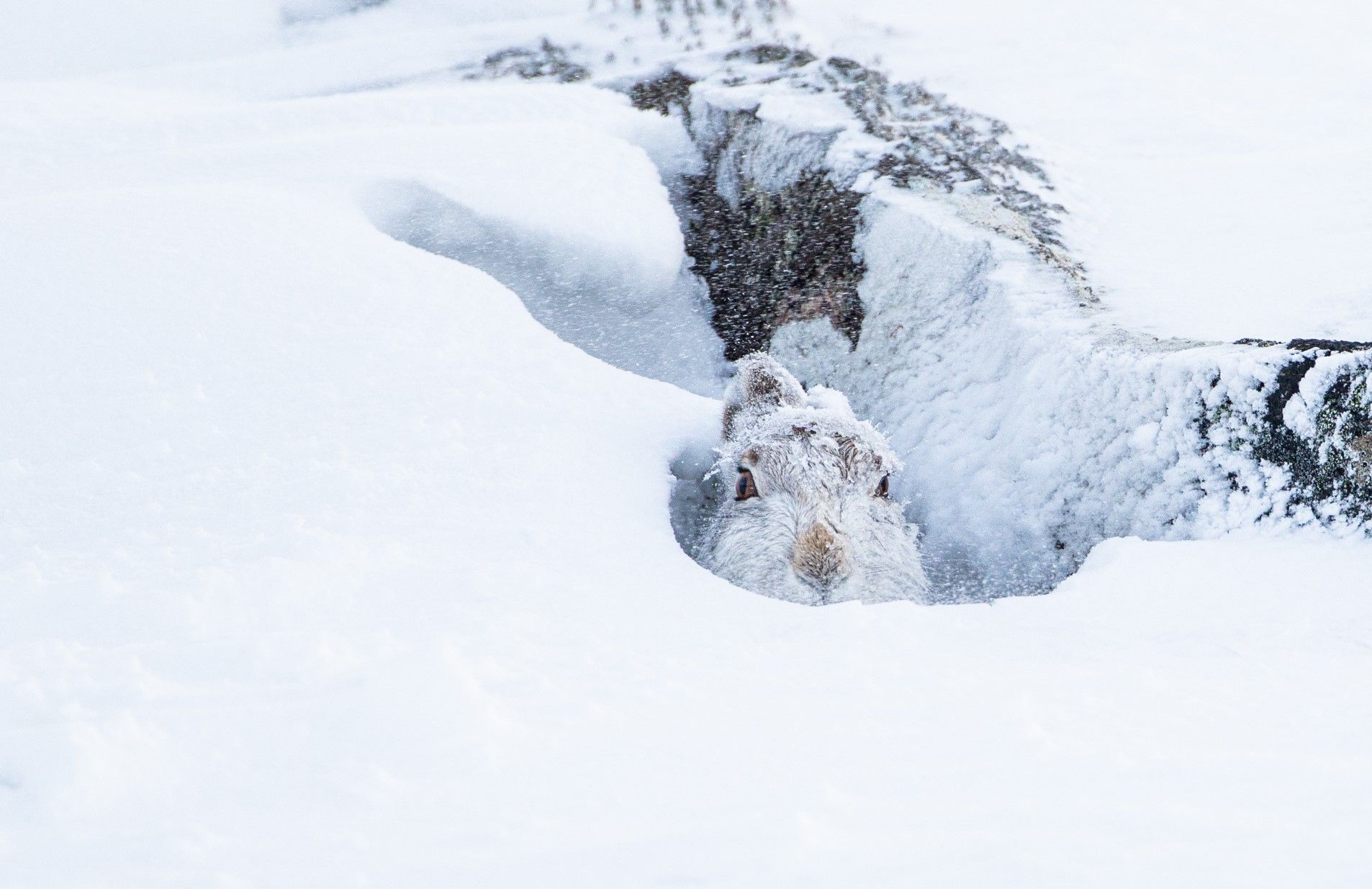
A few days later, I was back on the London Underground, pressed against hundreds of commuters, but my mind was still on the cold, open moors. I kept thinking about those hares: Arctic animals, living quietly in England.
That encounter changed the course of my life.
Years later, when I began trying to turn that fascination into formal research, support from People’s Trust for Endangered Species helped make it possible. Alongside the Hare Preservation Trust and other generous organisations and individuals, PTES helped provide the backing needed to begin long-term monitoring of England’s mountain hares in 2017.
Arctic animals in the English uplands
Mountain hares were introduced from Scotland to several parts of England in the 1870s, mainly for sporting purposes. Today, only the Peak District population survives.
Over time, these animals have become part of the landscape and culture of the southern Pennines. They have fascinated naturalists, walkers and local communities for generations, including the late Professor Derek Yalden, former President of the Mammal Society and a much-loved naturalist at the University of Manchester.
But by 2010, there was very little recent research into how England’s mountain hares were faring. Were they still widespread across the Peak District? How many were left? And how secure was their future?
Those questions stayed with me for years.
That early support, together with the time, advice and encouragement of many organisations and individuals, helped turn a long-held question into a decade of field research.
From the beginning, this work depended on people who cared deeply about the uplands and the wildlife living there.
Derek Whiteley, former President of the Yorkshire Naturalists’ Union, spent several days with me on the moors. He taught me the patience needed to search for mountain hares: long hours with binoculars, carefully scanning the landscape, sometimes hoping to find even one animal.
Julien Minshull, from Glossopdale Harriers fell running club, joined me on difficult moorland terrain. During night surveys, he showed an uncanny ability to navigate in complete darkness, retracing our steps over several kilometres using no map, compass or GPS, just field signs picked out by a headtorch.
Professor Liz Price MBE helped steer the research into Manchester Metropolitan University. Without her instrumental support, the work would not have happened.
Deep knowledge comes slowly
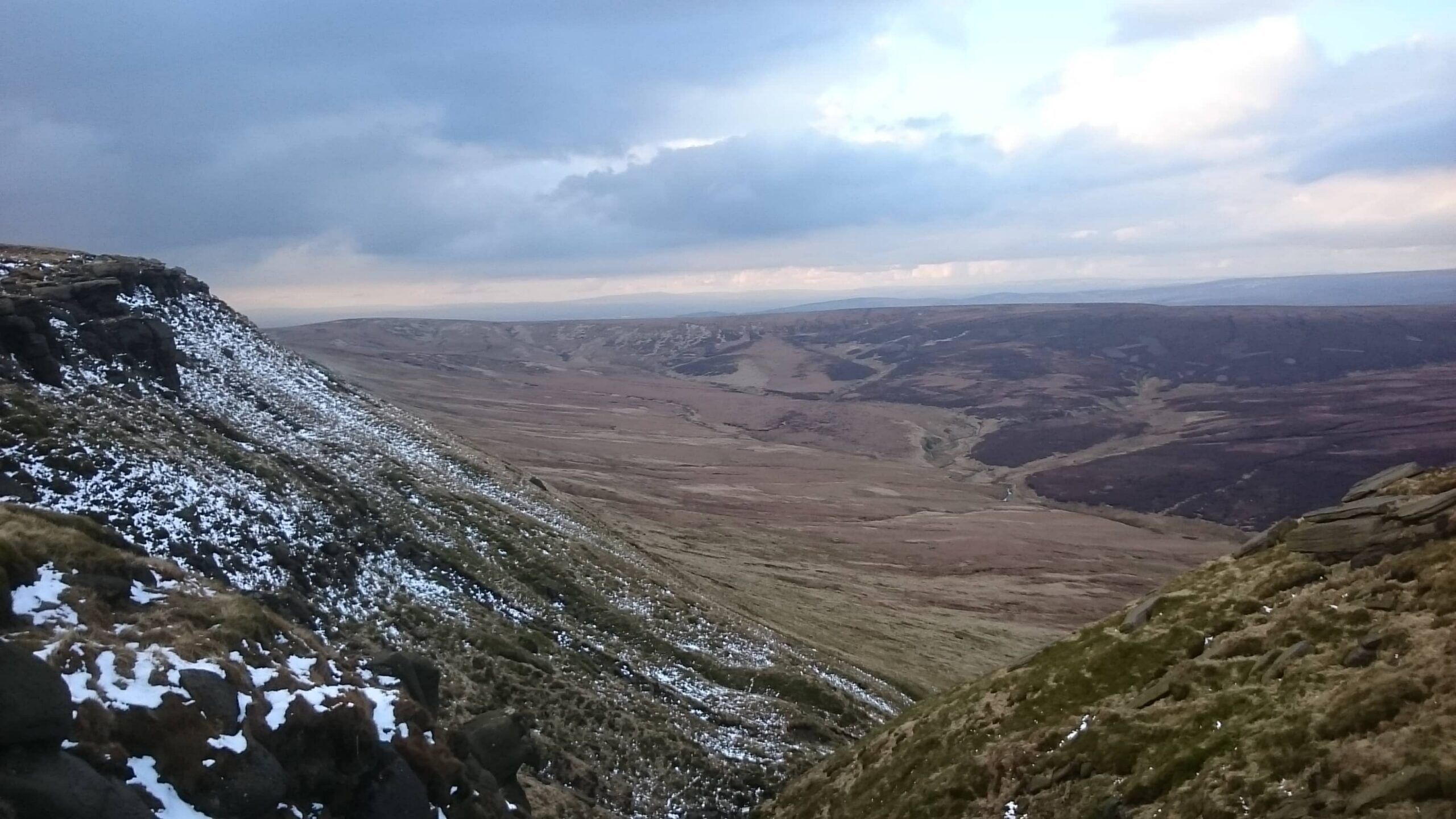
At the outset, mountain hares appeared to be spread widely across the northern uplands of the Peak District. But there was no clear understanding of exactly where they were, or in what numbers.
In natural history, deep knowledge comes slowly.
The years that followed brought some of the most intense, fulfilling and difficult experiences I have ever known: endless cold days wading through knee-deep heather; surprise encounters with hares hidden almost underfoot; freezing nights with a thermal imager; and long hours of data management, mapping and analysis.
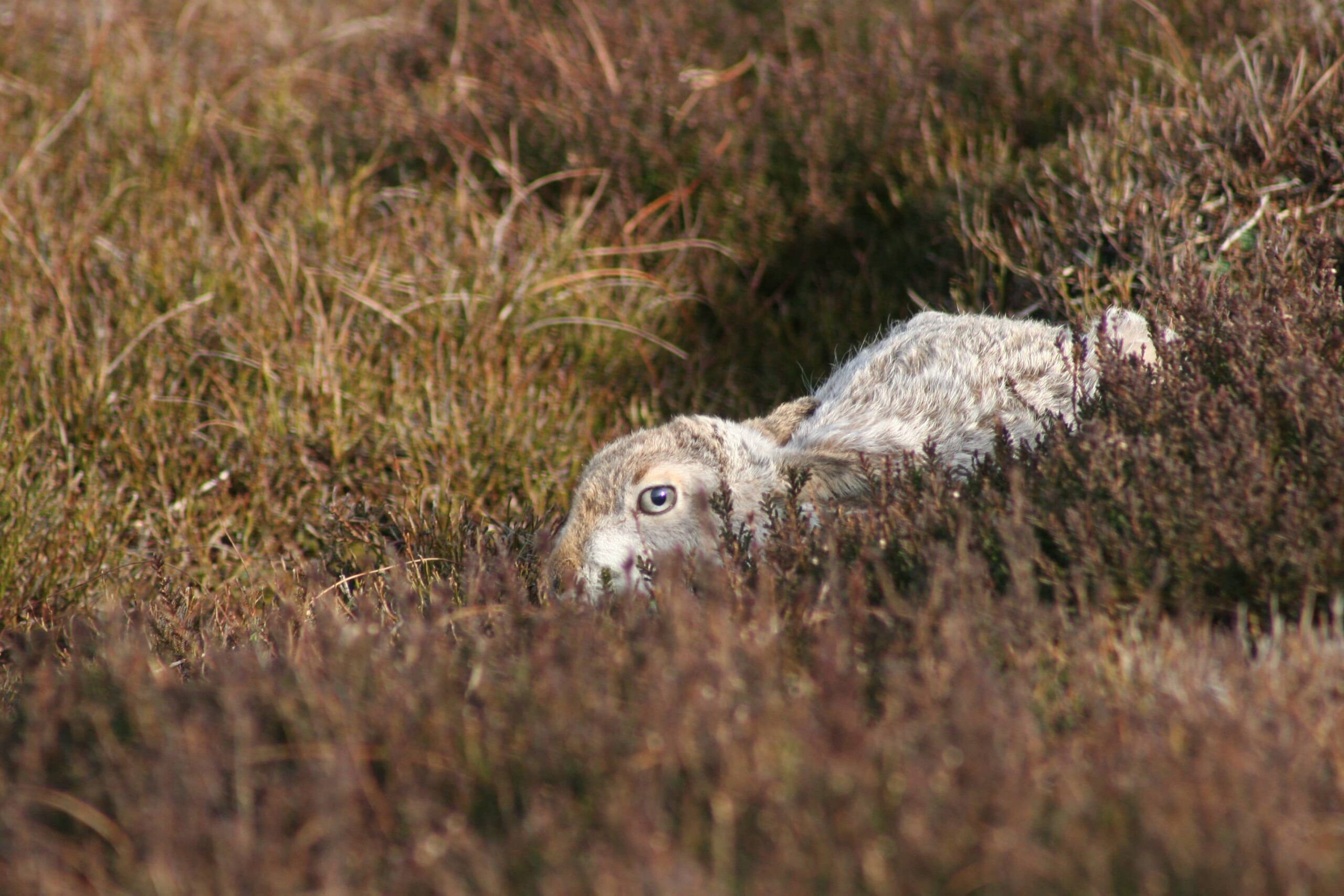
There were moments of real wonder. I saw mountain hares playing in spring, found their footprints in snow, watched an owl swoop at a hare and be batted away, and once opened my tent door early in the morning to find a mountain hare just ten metres away, gazing back at me.
There were also harder moments: hearing first-hand accounts of shot hares, finding road-killed hares, and seeing evidence of dead mountain hares being used as bait. I have seen how vulnerable these animals can be in dry, hot conditions, and how quickly the uplands can change.
But some of the most important experiences were with people seeing their first mountain hare. Their surprise and delight stayed with me. For a moment, they felt as though they had stepped into Narnia: yes, there really are white Arctic animals living in England.
Some people visit the Peak District only once. If they are lucky enough to see a mountain hare, they remember it forever.
What ten years of surveys revealed
By 2026, ten years of surveys had been completed. Across that time, more than 1,200km of open moorland had been walked, with over 3,300 mountain hare observations recorded.
The findings are deeply concerning.
Published research has shown the fragile conservation status of England’s mountain hares. Further surveys from 2017 to 2024 revealed a substantial decline, with concerns about future extinction risk. Surveys in 2025 and 2026 suggest those declines are continuing.
There were once two main population groups in the Peak District: Bleaklow and Margery Hill. Historically, mountain hares on Margery Hill were common enough that groups such as Sorby Natural History Society held annual hare walks. In broad daylight, people could see white hares against the brown heather, often flushing in “chain reactions” as one hare startled another.
Today, the Margery Hill population has almost disappeared. In 2026, after seven days of intensive surveys across 30km², only six individual mountain hares were found.
Mountain hares still persist on Bleaklow, with small numbers also on Holme Moss and Kinder Scout. That means there is still hope. But the window to act is narrowing.
Why protection matters
The decline of mountain hares in England is unlikely to have one simple cause.
They may be affected by disease, parasites, predation, competition or hybridisation with brown hares, poor genetics, habitat fragmentation, shooting, roadkill, climate change, extreme heat, dry vegetation, lack of water and wildfire.
Blanket bog restoration, including blocking gullies to raise water levels and restoring moorland plants, is associated with higher numbers of mountain hares. This kind of work may help, but moorland ecosystems are complex and we still need to learn more.
To understand how best to protect a small and vulnerable population, we need further research. We need to know how mountain hares use the landscape, where they breed, what habitats they rely on and how they die. This would help guide practical conservation work, from habitat restoration to roadkill mitigation, and could help answer whether the population needs further support.
But research and habitat work can only do so much if mountain hares are not properly protected.
At present, mountain hares in England have limited legal protection. In Scotland, where the population is much larger, mountain hares have year-round protection from killing or taking, except under licence in specific circumstances.
In England, the population may now number fewer than 1,000 individuals.
If people are investing time, money and expertise into understanding and conserving mountain hares, those efforts should not be undermined by lack of protection. These animals urgently need the same year-round protection already given to mountain hares in Scotland.
A leveret of hope
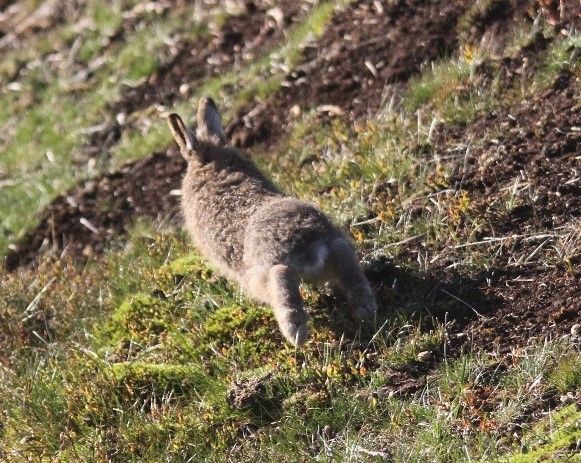
On my last spring visit to Bleaklow in late April 2026, the sun was hot and there was no wind. My boots crunched through dry heather and grass.
In a deep peat gully, I saw a dark brown mountain hare less than ten metres away. She stayed completely still, staring at me. I couldn’t understand why she didn’t run.
Then I took one more step and felt something move at my feet. A tiny leveret, no larger than a guinea pig, darted away from its first encounter with a human being. The mother hare fled too.
The mountain hare population is now so small that every leveret matters.
That young hare is part of the future of mountain hares in England. With the right protection, continued research and careful habitat restoration, there is still a chance to keep these remarkable animals on our moors.
But we must act before it is too late.
Written by Dr Carlos Bedson.
June 10th, 2026
Image credits (top to bottom): Mark Medcalf | shutterstock, Wayne Marinovich | iStock, Carols Bedson.